
You can know you’re safe while your body prepares for danger.
Boise Hypnosis · UAM-Based Hypnotherapy
Change the pattern that keeps taking over.
Want an answer first? Ask Abbie, the AI Assistant →

Work directly with John Wylie, CHtCertified hypnotherapist · 20+ years in hypnotherapyMeet John and explore his approach →
Individualized hypnotherapy for anxiety, habits, confidence, nicotine, and the automatic patterns you want to change.
Start with a conversation or explore the free Guide. You don’t need to finish the Guide before reaching out.
Why change can be difficult even when you know what to do
You know how you want to respond.
Then the moment hits.
Anxiety surges. The craving returns. You freeze, avoid, overthink, shut down, or repeat the same behavior.
The problem isn’t that you don’t understand it. The old pattern fires before you can choose differently.
Boise Hypnosis uses UAM-based hypnotherapy to change the learned pattern producing the reaction—so calm, confidence, freedom, or control becomes more natural when it matters.
Call (208) 440-3306 · Text John · Email John
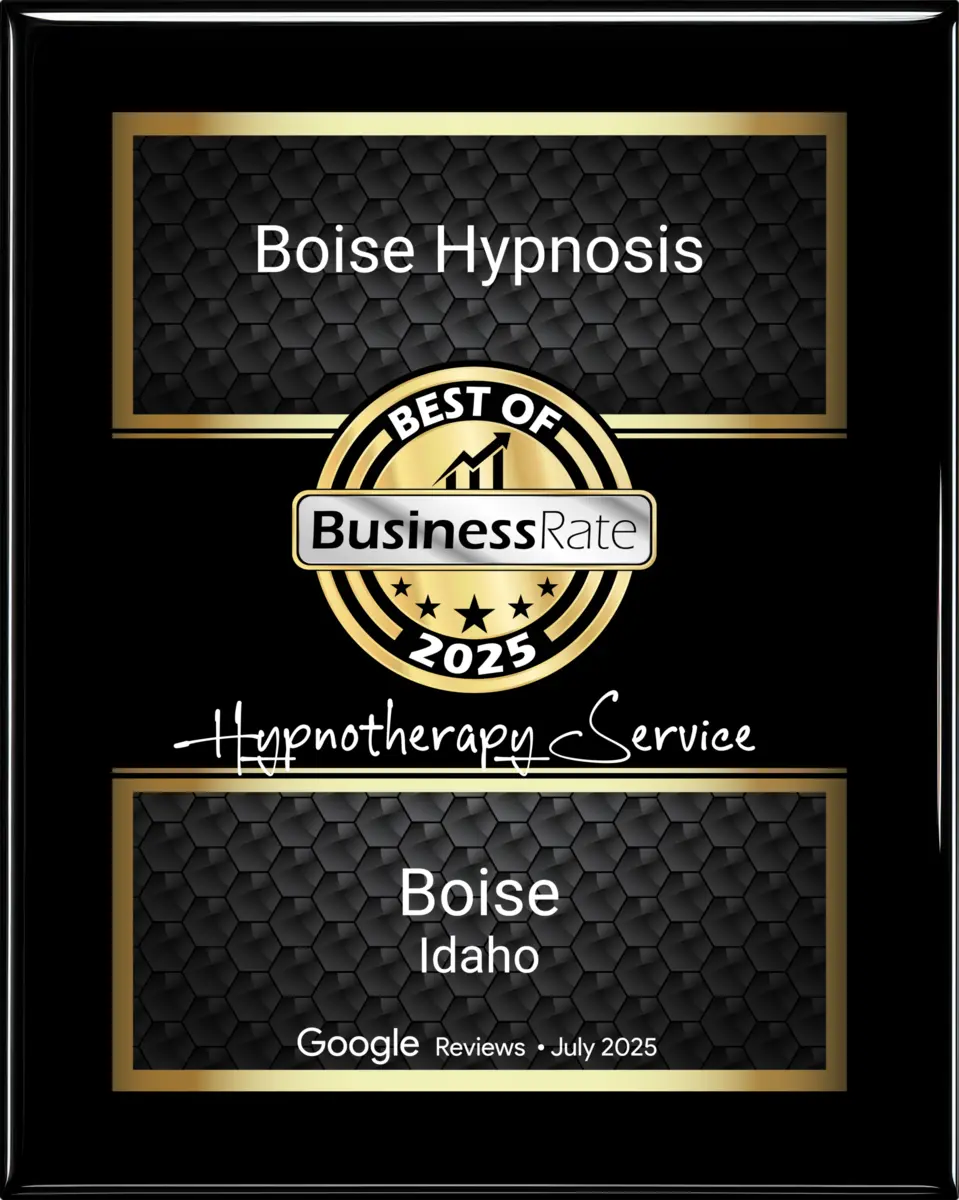
Award-Winning Hypnotherapy in BoiseBusinessRate Best Hypnotherapy Service (2025–2026) · Quality Business Awards (2022–2025) · Three Best Rated (2019–2026). Pictured: the 2025 BusinessRate plaque.
In-person sessions in Boise and private online sessions where legally permitted.
 Reviews
Real change in real life.
“What I have loved is to watch myself in situations and see me act differently than I used to. It feels awesome to pat yourself on the back and say, ‘Wow, you handled that really well!’”
“Boise Hypnosis helped me make real progress on some stubborn issues. Very professional and informative—they make sure you understand how things work so you feel secure before diving in.”
“My last dip was on the drive to hypnotherapy with John almost four months ago. Feels so damn good to be free from that addiction.”
You Don’t Need More Advice
You can know nicotine is controlling you while still feeling pulled toward it.
You can know you’re capable while doubt, avoidance, or self-consciousness shuts you down.
You can understand the problem completely and still repeat it.
The problem isn’t what you know. It’s what the situation sets off.
Advice tells you what to do.
Insight explains how the pattern developed.
Willpower restrains it temporarily. It doesn’t rewrite the pattern.
Treatment changes the response itself.
Not All Hypnosis Is Equal
Here’s something most people never hear about hypnotherapy: Many practitioners use prewritten “canned” scripts. A script for “anxiety” has to be general enough for many different people. Adding your name may make it sound personal without addressing why your anxiety takes over.
But writing a session just for you doesn’t solve the deeper problem by itself. Every word could be original, yet the practitioner still needs a way to decide what drives your response, what to change first, and how to build on what happens afterward. Personalized words are not necessarily a personalized treatment strategy.
Without a clear map of change, hypnotherapy is like performing surgery in the dark. The practitioner may be skilled, and the session may feel powerful, but even a carefully customized session can miss its target. That is the gap John developed UAM to address.
UAM Turns On the Lights
John Wylie, CHt developed the Unified Absorption Model (UAM) by combining more than 20 years of evidence-based hypnotherapy practice with findings from psychology and neuroscience. This science-informed framework helps him understand the automatic patterns behind how people feel and behave.
UAM looks at:
- what triggers the response and what the mind expects;
- the emotional force, relief, or reward that keeps it active;
- how identity and circumstances reinforce it;
- what needs to change first; and
- what new response needs practice and reinforcement in real life.
That map shapes your Personalized Treatment Plan: what to address first, what each session must accomplish, and how its language and practice fit your response. John builds each session for you, then adjusts the work based on what happens in real life. The aim is change that holds when the old pattern would usually take over.
See How UAM-Based Hypnotherapy Works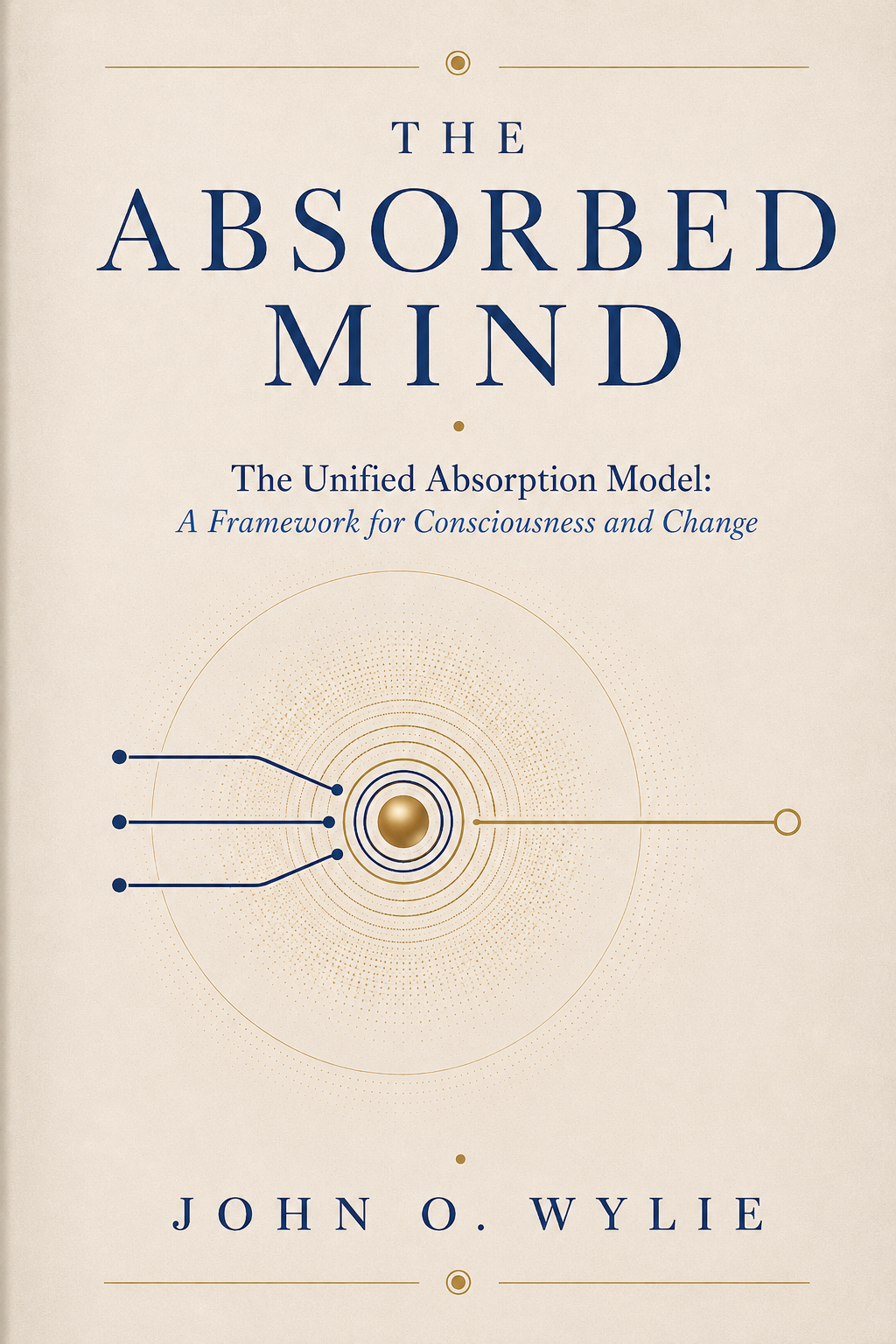
The book and public platform
The Absorbed Mind: The Larger Model Behind the Method
John’s forthcoming book, The Absorbed Mind, presents UAM as a broader framework for understanding consciousness and change—not merely its clinical application through hypnotherapy.
TheAbsorbedMind.com is the primary public home for the model, the book, and the larger body of work developing around it.
Explore The Absorbed MindHypnosis: The Science Proves the Potential—Not That Every Method Is Equal
Controlled research has shown that hypnosis can influence anxiety, sleep, eating behavior, pain, medication use, blood loss, and other measurable outcomes. That matters. It confirms that hypnosis is a serious and badly underused tool.
But positive research findings don’t make every hypnotist, script, or method equally effective—or turn label-matched hypnosis into individualized treatment. The conventional script-centered model remains inconsistent because it lacks a precise clinical architecture for identifying what is driving the individual problem, determining what must change first, and reinforcing the new response until it holds in real life.
UAM was developed to solve that reliability problem. It replaces conventional reliance on generic scripts, intuition, and trial and error with an explicit clinical architecture for assessment, targeting, sequencing, personalization, reinforcement, and failure analysis.
Research proves that hypnosis can produce measurable change. UAM addresses the harder clinical question: how to construct the right treatment for this person, this pattern, and the conditions in which the change must hold.
Anxiety, Stress & Overthinking
Anxiety doesn’t wait for logic.
It may begin with a tight chest, a pounding heart, sweaty palms, a sick drop in your stomach, or breathing that turns quick and shallow.
Your muscles brace. Your attention narrows. Your thoughts accelerate around what could go wrong.
You may know the feared outcome is unlikely.
You may know you’re overthinking.
You may tell yourself to calm down, stop worrying, or let it go.
Then anxiety takes over anyway.
Uncertainty starts to feel like evidence.
Reassurance stops landing.
The alarm is already running.
More reasoning doesn’t shut it down because logic is trying to argue with a response your mind and body are already performing automatically.
UAM-based hypnotherapy targets the learned pattern behind the reaction:
- what sets it off;
- what danger your mind expects;
- what keeps the alarm active;
- and what must replace it.
The objective is direct:
The same situation stops producing the same automatic reaction.
Anxiety is one of the concerns John works with most frequently.
Learn About Anxiety, Stress & OverthinkingWhat Do You Want to Change?
Anxiety, Stress & Overthinking
Change the threat pattern behind persistent worry, panic-like reactions, social fear, avoidance, anticipatory anxiety, and overthinking.
Explore Anxiety TreatmentHabits, Compulsions & Automatic Patterns
Break the cycle that keeps repeating despite clear intentions, repeated effort, and a genuine desire to stop.
Explore Habit ChangeNicotine Cessation
Change the pattern that makes nicotine feel useful, relieving, necessary, rewarding, or worth returning to.
Explore Nicotine CessationConfidence, Performance & Self-Concept
Change the self-doubt, avoidance, procrastination, self-consciousness, and identity patterns that keep limiting action.
Explore Confidence and PerformanceSleep & Regulation
Change learned alertness, difficulty settling, stress-driven sleep disruption, and other appropriate regulation patterns.
Explore Sleep and RegulationWeight, Eating & Health-Behavior Change
Change cravings, emotional eating, automatic choices, and repeated behavior that works against your health goals.
Explore Health-Behavior ChangeOther Appropriate Goals
Hypnotherapy can address far more than any short list can capture. Ask John about your goal, explore the free Guide, or ask Abbie a question. John will help you identify a sensible next step.
Ask About Your GoalRelief Is the Beginning. It Doesn’t Have to Be the Ceiling.
Many people come to Boise Hypnosis because something is hurting, limiting, controlling, or exhausting them. The first objective is clear: stop the unwanted pattern and regain freedom.
But hypnosis isn’t limited to repairing problems.
Once fear, hesitation, self-monitoring, avoidance, or an outdated identity stops consuming your resources, the same UAM-based architecture becomes a generative tool for developing stronger confidence, composure, focus, communication, resilience, performance, and access to capabilities you already possess.
You may want only relief. You may want to reclaim what the problem took from you. Or you may decide that removing the limitation is the beginning of becoming substantially more capable.
Relief → Freedom → Development → Excellence
The goal is yours. Treatment is built around how far you want to go.
From the Problem You Have to a Plan Built to Change It
Boise Hypnosis begins by understanding the pattern, determining whether this approach fits, and showing serious, ready prospects what John recommends—and why.
1. Start where you’re comfortable
Call, text, email, book a free phone consultation, explore a Guide, or ask Abbie, the AI Assistant. You can get in touch before reading anything.
2. Keep the right information handy
Have the appropriate free Guide emailed to you for later, or read it now without providing an email address. Choose the Nicotine Guide for nicotine goals and the General Guide for other appropriate goals.
3. Learn before committing
The Guide explains hypnosis, treatment, participation, and what to expect. Complete it before your consultation. Initial questions and booking remain available now. Abbie is available for questions whenever they arise, without a required AI interview.
4. Speak directly with John
Choose a free phone consultation or contact John directly. You do not need AI approval to talk.
John looks beyond the label to understand what keeps happening, what sets it off, what gives the response its power, why previous efforts failed or improvement didn’t last, and what successful change needs to look like in your real life.
The consultation is where John personally confirms clinical suitability and treatment fit, answers the final important questions, and determines what treatment must accomplish.
5. See exactly what John recommends
When John confirms that treatment is appropriate, a Personalized Treatment Plan is the normal next step.
Your plan explains:
- what appears to be keeping the problem active;
- what treatment needs to change;
- what should be addressed first;
- how the work should be structured;
- the recommended number of sessions;
- the current price;
- and why John is making that recommendation.
You’ll see the path John recommends before deciding whether to begin.
Most people don’t question whether meaningful change is valuable. They question whether paying for treatment will actually produce it. The honest comparison isn’t the price of one appointment. It’s the total cost—in money, time, and continued disruption—of achieving change that holds.
Rare, unusually complex cases may require paid Comprehensive UAM Case Analysis and Treatment Planning before John can responsibly prepare a detailed plan. If that applies, you’ll know why, what it includes, what it costs, and what you’ll receive before making a decision.
6. Begin treatment built around you
Once you enroll, your appointments are reserved and your treatment begins.
Every hypnosis session is built around your goals, triggers, expectations, emotional patterns, identity, natural absorption style, and real-life circumstances.
John refines the work as your responses change and uses the recordings you make during sessions and between-session practice when they’ll strengthen the result.
Read First. Decide Second.
The prospective client guides are substantial educational resources that help you understand the problem, evaluate hypnotherapy intelligently, and decide whether Boise Hypnosis is right for you.
You can contact John with initial questions or book a free consultation now. Complete the appropriate Guide before your consultation.
Free prospective client guideGENERALBoise Hypnosis
Is Hypnotherapy Right for You?
A clear explanation of hypnosis, automatic patterns, UAM-based hypnotherapy, suitability, the consultation, the Personalized Treatment Plan, and what treatment involves.
Read or Download the General GuideFree prospective client guideNICOTINEBoise Hypnosis
Nicotine Cessation Prospective Client Guide
A direct explanation of why nicotine keeps feeling valuable, why switching products doesn’t solve the underlying problem, and how treatment targets the pattern that keeps nicotine in control.
Read or Download the Nicotine Cessation GuideNo email address is required to access either guide.
Real Change Shows Up When Life Tests It
In John’s experience, most clients begin to feel better or notice meaningful improvement after the first session.
Some changes are obvious immediately.
Others become clear when a familiar situation happens and the old reaction doesn’t.
Improvement shows up in concrete ways:
You stay calmer.
The craving loses its force.
The thought no longer hooks you.
The behavior feels less compelling.
The situation that used to control you becomes easier to handle.
Early improvement matters.
It isn’t always the end of the work.
The new response must become strong enough to hold through greater stress, stronger triggers, difficult relationships, unfamiliar settings, and the situations that once brought the old pattern back.
The goal isn’t to feel calm during hypnosis.
The goal is to respond differently when real life gives the old pattern another chance to take over.
Work Directly With the Developer of UAM
John Wylie, CHt
John has practiced hypnotherapy for more than 20 years. He developed the Unified Absorption Model and is the author of How Change Actually Works and How Nicotine Cessation Actually Works—two practical books that extend the same clear, evidence-informed approach into client preparation and treatment.
Boise Hypnosis was named the Best Hypnotherapy in Boise City by Quality Business Awards in 2022, 2023, 2024, and 2025, with a quality rating above 95%. BusinessRate® recognized Boise Hypnosis as the Best Hypnotherapy Service in Boise in 2025 and 2026, based on Google reviews. Three Best Rated® has recognized Boise Hypnosis among Boise’s top three hypnotherapy practices every year from 2019 through 2026.
He personally:
- conducts qualified consultations;
- analyzes the pattern;
- prepares Personalized Treatment Plans as the normal post-consultation recommendation for qualified prospects;
- designs every hypnosis session;
- reviews your progress;
- and adjusts the work as your responses change.
You’ll know:
- what he believes is keeping the problem active;
- what he recommends changing;
- why he recommends that approach;
- what the treatment is meant to accomplish;
- and what it will cost before you decide.
From consultation through treatment, you work directly with the person who developed the model guiding your treatment.
Learn More About JohnBusinessRate2025 · 2026View the 2025 certificate ↗
Quality Business Awards2022 · 2023 · 2024 · 2025
Three Best Rated2019 · 2020 · 2021 · 2022
2023 · 2024 · 2025 · 2026
Get a Clear Answer Now
The Boise Hypnosis AI Assistant answers questions using approved Boise Hypnosis information.
The AI Assistant explains the process, directs you to the correct guide, and helps you identify the right starting point.
It doesn’t diagnose.
It doesn’t conduct hypnotherapy.
It doesn’t replace medical care.
It doesn’t pretend to be John.
Start With the Next Step That Feels Right
Ask a question, explore the free Guide, or speak directly with John. There is no required order for these first steps.
Contact John Read the Free Guide Ask the AI AssistantThe appropriate Guide is required before your consultation. John personally determines suitability and treatment recommendations.
Your next step. Your choice.
Have a question? Get an answer now.
Abbie, the AI Assistant, can answer questions right away. Explore the free Guide or speak with John when you’re ready. You may contact John with initial questions or book now. Please finish the appropriate Guide before your consultation.